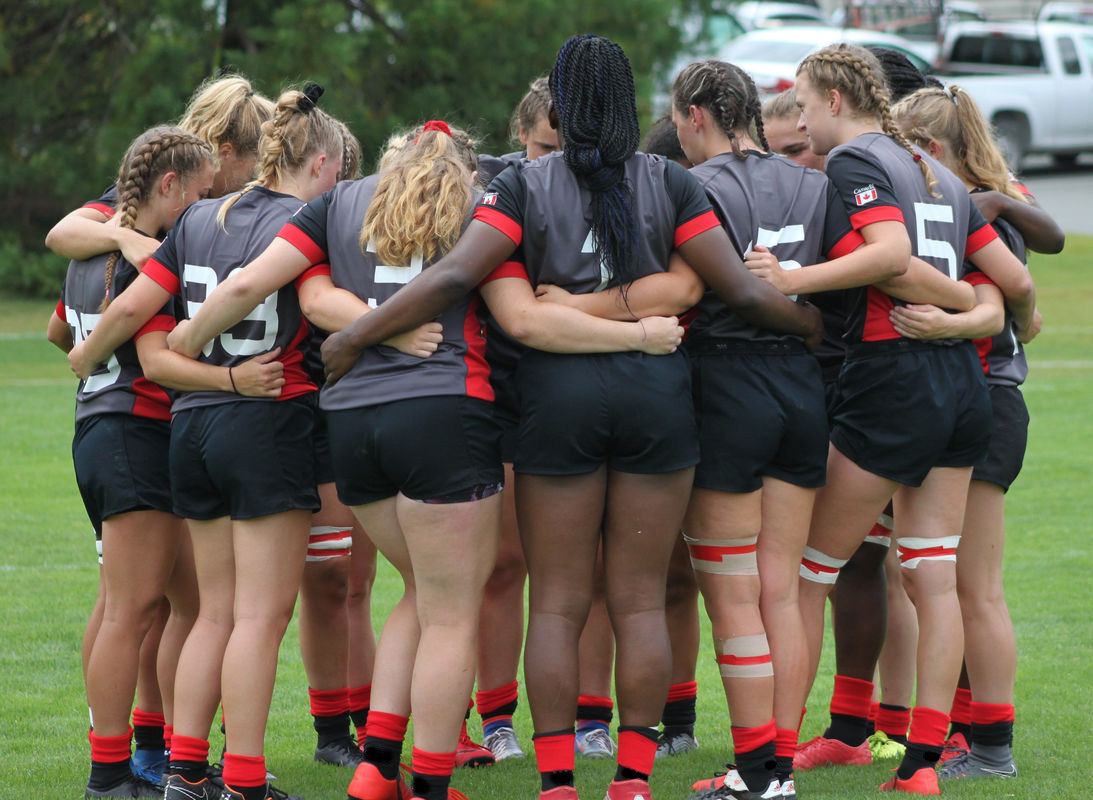
As previously announced on November 16 at the 2023 Canadian University Men’s Rugby Championship banquet, Maria Samson has been appointed the Chair of the CUMRC Organizing Committee effective January 1, 2024.

Maria joined the CUMRC Board in January 2020 while she was still head coach for the Mount Royal University (MRU) Men’s Rugby team, and a member of the Rugby Canada Board of Directors. She was a highly decorated member of the Canadian Senior Women’s team as the 2012 Women’s XVs Rugby Canada Player of the Year and a 2014 Rugby World Cup Silver medalist. She also counts time with the McGill University Martlets, SABRFC, Windsor Rogues, Fort McMurray Knights, Alberta Wolfpack, Calgary Hornets and Calgary Saints, as well as travelling teams the Dog River Howlers, Stars Rugby and Canadian Classics.
Since joining the CUMRC Board, Maria has also served as Vice Chair of Rugby Canada, and only retired as the MRU head coach following their 2023 playoff run. Her CUMRC duties kept expanding and included her roles as our social media creator, broadcast commentator, Instagram interviewer and tournament director at the 2022 and 2023 championships, our rules and regulations head, and beginning in 2023, CUMRC Vice Chair.
Maria takes the reins from Jeff Chan, the current Chair and co-founder of the CUMRC in 2017. As has been recounted numerous times, in 2015-16, Jeff had been frustrated by the lack of a national university championship in Men’s Rugby which led to all university programs eending their schedules after their conference championships. Working with fellow co-founders Mike Holmes of the Canadian Rugby Foundation, which became the lead CUMRC financial sponsor, Doug Tate, the long-time head coach of the University of Victoria Vikes, and Bishop’s University rugby alumnus Keith Labbett, the foundation was laid at the inaugural 6-team tournament hosted by the University of Guelph in 2017. Except for the 2020 COVID year, the CUMRC has met all but one of its goals:
- grown (from 29 to 33 teams competing to qualify, and 8 teams in the tournament);
- helped develop the calibre and depth of university men’s players and programs across the country;
- been recognised as a crucial step in the pathway towards Canada’s Men’s senior team; and
- established and maintained the national university men’s rugby championship.
The lone exception is gaining the endorsement of Men’s Rugby by U SPORTS as an official sport, (as is the case for Women’s Rugby) and as it has been the case with the OUA and RSEQ conferences for many years. This remains a work in progress by Rugby Canada.
It is now time for the CUMRC to take another step in its evolution, with Maria taking the lead, working with the University of Ottawa as the 2024 host, coordinating the University Men’s Rugby Coaches Association, and working with the Canadian Rugby Foundation’s University Rugby Supporters Fund to continue to develop university Rugby Coaches across Canada.
Good luck Maria!





 Under the management of a volunteer Board of Directors, Twin Elm has grown over the last half century to hold a special place in Canada’s rugby history. The park has hosted provincial and national championships at the high school, junior and senior levels, as well as numerous international matches, including Canada’s epic 18-16 victory over France in 1994, and the Canadian women’s first ever home soil victory over the U.S.A. in 2001. The park has also showcased the Canadian German Shepherd championship, Gaelic Athletic competitions, lacrosse, and touch football to list a few.
 Dozens of internationals have developed their skills on Twin Elms five pitches, and have gone on to wear the maple leaf with pride at Rugby World Cup’s going back 30 years, most recently at the 2021 Women’s Rugby World Cup in New Zealand. Twin Elm also holds the unique distinction of being the only rugby park in the world to have produced the captains of both the women’s and men’s national teams in consecutive Rugby World Cups. This unprecedented accomplishment occurred when Sherri Sparling captained Canada at the 2002 Women’s Rugby World Cup in Spain, and Al Charron followed by leading the Canadian men’s squad into Australia in 2003.


 For example, one of the primary needs is to replace the old, donated lawnmower with a modern zero-turn mower designed for facilities the size of ours, which would result in significant time savings in volunteer hours. Other improvements include modernizing the lockers to 21st-century standards, renewing the lounge, replacing stands, and adding landscaping such as fences or tree planting. The list would be open-ended as long as rugby-related and of a longer-term capital expenditure versus current operating expense.